
What You'll Learn in This Episode
Have you ever felt overwhelmed by complicated investing terms or hesitant to start investing, then this episode is for you. Today, we are stripping away the confusion and making the complicated world of investing uncomplicated and simple.
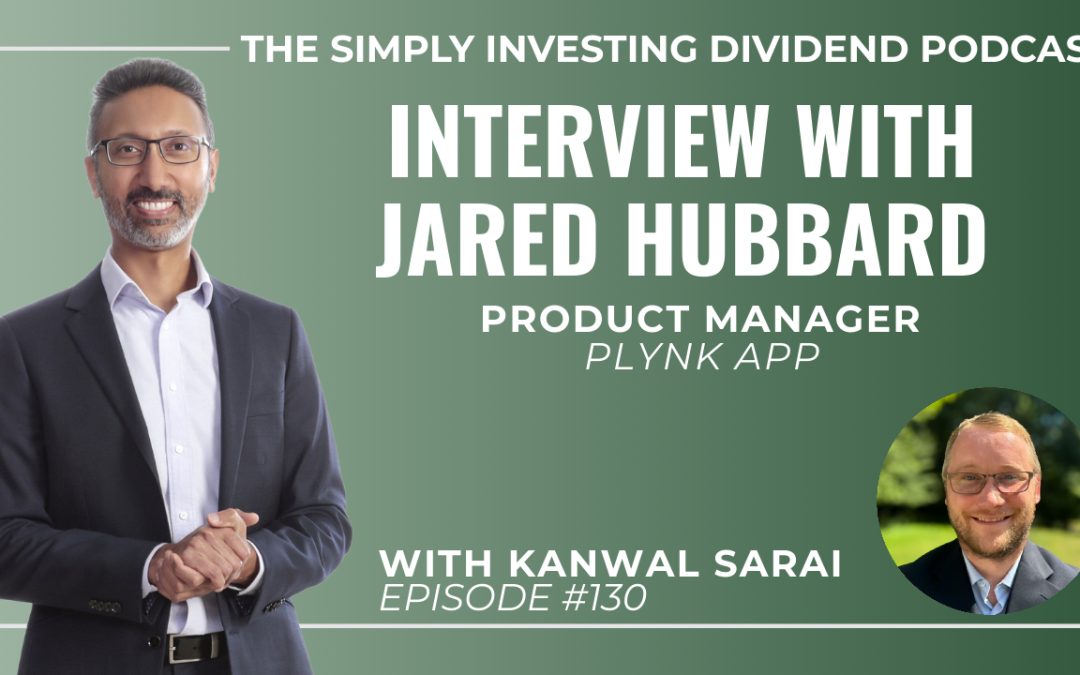
Our guest is Jared Hubbard, the Product Manager for the Plynk mobile app and a former Director of Planning and Advice Services at Fidelity Investments. Jared holds multiple financial licenses and has dedicated his career to helping everyday people build real investing confidence.
In this episode, we discuss why investing education is your superpower and how to avoid the most common financial mistakes. We also dive into the power of dividend investing and how tools like the Plynk mobile app let you start investing with as little as one dollar.
Whether you are a seasoned investor or a brand-new investor, Jared’s practical advice will inspire you to take control of your financial future.
Accelerate your financial freedom with Simply Investing—reduce risk, save time, earn more:
Get Started: https://simplyinvesting.com/
Dividend Investing Course: https://simplyinvesting.com/course/
Stock Research Platform (web app): https://simplyinvesting.com/app/
Plynk Website: https://plynkinvest.app.link/J1NG7PA1J5b
Complete Transcript
Speaker 1 (00:00):
Have you ever felt overwhelmed by complicated investing terms or hesitant to start investing? Then this episode is for you. Today, we are stripping away the confusion and making the complicated world of investing uncomplicated and simple. Our guest is Jared Hubbard, the product manager for the Plink mobile app and a former director of planning and advice services at Fidelity Investments. I’m Kanwal Sarai and welcome to the Simply Investing Dividend Podcast. In this episode, we discuss why investing education is your superpower and how you can avoid the most common investing mistakes. We also dive into the power of dividend investing and how tools like the Plink mobile app let you start investing with as little as $1. Whether you are a seasoned investor or a brand new investor, Jared’s practical advice will inspire you to take control of your financial future. Let’s get started. Jared, welcome to the Simply Investing Dividend Podcast.
Speaker 2 (01:17):
Okay, well, thank you for having me.
Speaker 1 (01:19):
We’re so happy to have you on our podcast today. You’ve got lot of experience. You’ve got 16 years of experience in the industry, in the investing space. You’re currently with Plink. We’re going to talk about the mobile app and all of that good stuff as well later on. But let’s get started with the mission statement of your company, the mission statement of the app, which completely aligns with our mission statement here at Simply Investing, right? Our job when we teach our investing course is to teach it without any jargon, plain English. And I’m going to read a line here. It says, “The Plink app provides an easy to use experience that is free of complexity and confusion.” So I just love that. Why build an app around that?
Speaker 2 (02:09):
Well, there’s a number of reasons why, but I think one of the biggest is over the years, especially with the advances in technology, there’s no reason that we can’t uncomplicate something that’s complicated and give accessibility and access to individuals. And for so long, the investing world has kind of been, whether it’s this brick and mortar, but intimidating space where a lot of people might feel like it’s hard to step into that space, whether I don’t feel I have enough knowledge, I might feel like I don’t have enough money, or I’m just intimidated by the overall experience. And Plink was kind of born out of that, of seeing a subset of the population not taking that first step, getting their feet wet into the investing world. So our entire goal was to, let’s break down that whole barrier. We have access to all these different technologies that allow us to bring this kind of investing experience that’s intuitive and easy straight to the mainstream investor across America.
Speaker 1 (03:18):
Yeah, I love it. That is so important. So that leads me to the next question. Why is investing education, why is that so important? Why is that priority number one?
Speaker 2 (03:32):
So I think that’s priority number one because anytime you educate yourself on a topic, it leads to confidence. There’s a direct correlation to, I now understand this concept and I might know what to do, but it builds a confidence within any subject matter expert. You can now talk the talk and walk the walk. So education being at that forefront, we felt one would create a less intimidating experience, but two, we’re going to do the most important thing that we can for everybody, which is build their confidence up so they can understand what they’re doing, why they’re doing it and how to do it.
Speaker 1 (04:13):
That is incredible. I mean, I can tell you from experience, when I have students who have gone to the step of starting to invest without any education, just going online, you’re going on any of the social media sites, picking up some stock symbols here and there, not understanding what a dividend is, what a PE ratio is or anything, and just blindly buying stocks because someone online told you that it was a great buy, that never ends well. And I can tell you from experience, it doesn’t end well.
Speaker 2 (04:50):
Or it leads to them chasing returns, and that’s kind of the opposite of what you’re trying to do in the investing world.
Speaker 1 (04:56):
Yeah, absolutely. So what is it that your company is doing or in the app? How do you educate people first?
Speaker 2 (05:09):
Yeah, so I think within Plink, we have a ton of different educational content that’s tailored to level, in other words, level people up where we can tailor educational content to a novice first time investor who’s never put a dollar into the market, but we also can have education tailored to a more sophisticated investor who’s ready to move on to a more complex trading strategy or topic. So we lead with that with curated learning journeys and make that the forefront in the app. And we also want to promote education around outside of just the ups and downs of the portfolio and the market so individuals can really understand and have a grasp of the security that they’re investing into. What are the different securities within a fund, the top holdings, what are upcoming dividend payouts, what are those ratios that are happening? But more so even practice what you’re trying to do.
(06:12):
So we have tools within the app like simulated trading where users can take $100,000 of fake money, as we call say paper money, use real time market data and practice investment strategies that they might have just learned in an educational article that they read and see how that works out. Again, all with the goal to build that kind of confidence so they know what to do. And another great tool that’s within Plink that kind of allows that is you can also back test and that’s a jargon term that is used in the market. We call it virtual portfolio. So it’s the, I wonder what if I had done this in the past, 10 years ago, I thought about investing into this specific fund or position, what would’ve happened if I did that? And we’ll show you what exactly would’ve happened in the past all the way to the future now of what would your investment actually have done if you had implemented that investment strategy, again, trying to build confidence among these individual users.
Speaker 1 (07:16):
I love it. This is amazing. This is a great way for anybody to learn and like you said, gain confidence without making mistakes with actual money. So you can actually go through the simulation, which is fantastic. Yeah.
Speaker 2 (07:31):
Take the anxiety out and let’s build the confidence up.
Speaker 1 (07:34):
Yeah. Now I strongly believe, and I want to hear your opinion, this stuff should be taught in schools, just basic investing 101. What do you think?
Speaker 2 (07:47):
Absolutely. And I think when you’re referring to schools, it’s younger than let’s say the collegiate level because obviously you can get finance degree, but that used to be, I feel like at one point part of it where you had to balance a checkbook. But I absolutely agree, trying to bring that further and earlier on into individual lives is critically important because one, you can educate enough where anyone in high school can get through and understand these topics. But furthermore, I think it hits upon the idea, if not one of the most important aspects when it comes to investing is time. So the earlier you can get individuals to understand what to do, the earlier they might be able to get, again, to dip their foot into the water of the market. And if they have time on their side, it looks very good, let’s say promising for them.
(08:40):
The longer that you have to invest, let’s just say that you have more time to grow, you can deal with ups and downs in the market. And if you’re looking 20 years out, why do I care what’s going on today in the market?
Speaker 1 (08:53):
Yeah, absolutely. The younger you start, the better off you’re going to be. And the other thing that I try to relay in all of our episodes is that this isn’t rocket science. I believe, and I’ve heard you say the same thing, I think in high school they should be teaching this to everybody and it’s not that complicated.
Speaker 2 (09:13):
Absolutely. It’s basic investing at a bare minimum.
Speaker 1 (09:17):
Yep, absolutely. I’m going to ask the next question. I don’t know if you have the answer because I’ve struggled with the answer. I’m going to ask you anyway, so feel free to say if you don’t know.
Speaker 2 (09:27):
Sure.
Speaker 1 (09:29):
Why isn’t this taught in schools, like in high school?
Speaker 2 (09:34):
I do not know at all. For the life of me, I wouldn’t even be able to take a guess as to why, in all honesty. And if anything, that leads on the importance of why it should be.
Speaker 1 (09:45):
Yeah, absolutely. Yeah. And it’s the same in the US and in Canada, right? We’ve seen the same thing. Everybody that I talk to, I let them know how important this is, but I don’t have an answer, a clear answer either. Is it a lack of funding? Is it a lack of knowledge with the teachers themselves that they don’t understand the topics as well? I’m not sure, but I’m glad that you and I are talking about this today.
Speaker 2 (10:13):
And I think maybe one day it will be in the future. I mean, you see a lot of advances in the investing world where now you have youth accounts, where investment firms are trying to promote getting, hey, your kids involved younger. So bringing that, having that accessibility there might eventually lead to maybe an opportunity because traditionally when it comes to opening up a brokerage account or anything like that, you have to be 18 years or older. So maybe you could point to something like that, but I think to what we’re both saying is, okay, that doesn’t mean we can’t educate. There’s no reason why we can’t educate on that.
Speaker 1 (10:49):
Yeah, absolutely. Do you have any suggestions for, because I talk to parents a lot. And so if you’ve got somebody who’s got a child who’s 16, 17, they’re not 18 yet, they can’t open their own account. Is there anything that parents can do to get their teenagers introduced to investing? I know the kids themselves can’t invest on the app, but is there anything that parents can do to help out in that respect?
Speaker 2 (11:20):
I mean, one, exposing them to topics like that by themselves and teaching them, whether it’s real life examples about home and whether it’s work around the house and taking away, let’s say taking the allowance and putting it towards something and helping them teach interest and how if you put this somewhere that is interest bearing, you’ll get some compounding growth on top of that. But I think exposing them, if they can, to different types of youth accounts that benefit them. I mean, there are a number of companies out there that parents can open youth accounts under for their child and help them actually get invested and let them, let’s say, even choose an option after getting educated. But again, I think just bringing them and making them aware of these topics and how it relates to their actual life and in the future is probably the best thing to do, whether or not it’s actually getting them invested.
(12:22):
The education, again, you’ll hear this a lot with Plink, that education is what we want to promote, whether you’re young or old. And we like to say it’s not about time and where you are in life, it’s about skill and will. So let’s show as many people as we can, young and old, the benefits of this.
Speaker 1 (12:42):
Yep, absolutely. And this kind of reminds me of the old saying of when is the best time to plant a tree? It’s like years ago, the second best time is today.
Speaker 2 (12:52):
Exactly.
Speaker 1 (12:53):
Yeah. Now my personal story, just very quickly, we did that with both of our kids. We got them started when they were really young, at the age of nine. Of course, they’re too young to open up their own accounts, but my wife and I opened an account. I did it for my son, my wife did it with our daughter, and then we gave them the basics. Like I said before, it’s not rocket science. And the kids put all their birthday money or the money they get from grandpa and grandma every year,
Speaker 2 (13:24):
Put
Speaker 1 (13:24):
That into an account where they could then start it small with $50, $100, and then just grow it from there. So I think this is, like we said, you and I are on the same page. The younger you can start, the better off you’re going to be.
Speaker 2 (13:41):
Absolutely. Wholeheartedly.
Speaker 1 (13:43):
Yeah. Now let’s move on to the next topic I wanted to chat with you was a little bit about dividend investing. Our audience, they’re dividend investors, DIY, they’re going to do it themselves, but there might be some people listening to this episode that have not ever invested in dividend stocks. What are some of the benefits of investing in, and we’re not going to get into specifics, we are not going to give out company names, just in general of investing in quality stocks that have been paying dividends for a very long time?
Speaker 2 (14:18):
Yeah. I mean, for those who haven’t even invested when it comes to dividends, and obviously a number of your listeners, you’ve explained exactly what that is as far as companies taking profit, their profits and paying them back to the shareholders. But when you say quality, typically you’re referring to companies that are consistently paying dividends and hopefully that those dividends are then growing. That’s typically going to be a sign of the health of that company in general. Among other things, there are traps that you can get into obviously when looking at those ratios, but in general, a growing company with a growing dividend yield definitely can signal health amongst that company. But as far as the importance, one big term I think people are very used to nowadays is the gig economy and everyone looking for additional income that they can get. I like to refer to dividends as it’s a gig for your stock or your security, right?
(15:16):
It makes the money that you’re putting into the market for, let’s say, a long-term growth goal, it makes it go farther. You’re stretching that out a little more, making the money work a little harder for you than if you didn’t invest into something that was paying out dividends or capital gains. So the importance really is how can I make the most out of the money that I’m putting into the market? And dividends wholeheartedly are a way to accomplish that because again, your stock or your position just went and got a gig and is now paying you back extra on top of what the long-term goal is. And at Plink, we believe in that so much that we actually have a 25% dividend match offer where any Plink user who invests into dividend paying stocks, funds, when they pay dividends, we will match 25% of that dividend up to $250 annually.
(16:12):
I’m just trying to reinforce that topic.
Speaker 1 (16:16):
Oh, that’s incredible. I didn’t know about that. And that’s a great way to encourage people to invest in dividend stocks. I’ve been a dividend investor for over 25 years, so all of my audience knows where I stand with dividends, but I love what you said about sort of like it’s like a side hustle, but it’s a side hustle.
Speaker 2 (16:39):
Exactly.
Speaker 1 (16:41):
And they’re generating the dividend income consistently. So that’s really good. Question for you about having a long-term perspective versus a short-term perspective, because I do get people who will email me and say, “Hey, listen, I just want to double my money in 30 days. What do I invest in? I just want to triple this.” So what are your thoughts on long-term versus short-term perspective?
Speaker 2 (17:11):
So I mean, when it comes to short-term and long-term, I think we mentioned earlier about why is it important to invest earlier? Well, it’s because you have more time to grow. You can withstand more market ups and downs over a period of time. When you really start looking at the short-term, I mean, that’s where you’re really trying to get into market timing, right? You’re trying to get into a quick win, I guess we could say. And that really isn’t the case when it comes to investing, and that’s something that I see some mistakes that users do. I mean, traditionally, when it comes to just planning in general, there’s a number of factors when you’re building a portfolio that you look into, risk tolerance, how much risk you can actually take, your financial situation, how much you can actually invest, a number of other topics. But one of the other important ones is time.
(18:14):
How long do you have to invest and when do you need these funds by? And if you’re looking at 30 days, 60 days, even six months to a year, there are concerns if you’re trying to make a quick profit, if those funds are so important to you now and you actually need them in a year, it might not be the best option to put it into the market because in one year, the market could have a downturn, which again, we turn back to time is important, being able to withstand ups and downs. Once you really start shrinking your timeframe, the entire, let’s say, asset allocation or the risk tolerance can change because you need this in 30 days. So are you really willing to risk something like that? But the importance is having a clear plan when you need it, what that risk tolerance you’re willing to take is and what your overall financial situation is.
Speaker 1 (19:11):
Yeah, absolutely. That’s a great answer. I can tell you from experience, when people are looking for short-term gains, it’s going to be risky. The shorter the timeframe, the higher the risk. And like you said, if you can wait longer, you’re going to be in a much better position. And that’s what I always try to teach my students as well. Okay. So let’s take a look at, we mentioned quickly about quality. So my audience, my students, we’re always looking for quality stocks, not just any stock that pays a dividend, but we’re going to look at what’s the debt level, what’s the PE ratio? Again, this might sound complicated. It’s not. It’s not rocket science. How does Plink, the mobile app, how does that help your users, customers find those quality stocks that are out there?
Speaker 2 (20:12):
Yeah, so we have a number of different ways that we try to empower the Plink users, one of which I would say would be kind of what we would call our discover and research page, where we have curated categories related to different topics, one of which is dividends. So you can actually go and look at
Speaker 1 (20:32):
All
Speaker 2 (20:32):
These different dividend stocks and funds. A second piece of that is when you actually do go in and try to research a specific fund or stock, the information that we’re showing, just like you had mentioned, whether it’s PE ratios, debt levels, shareholder, chairman who’s on the chairmans, the boards, we try to bring all that information to the front for the user. We also have things like AI powered news that is tailored to keep, let’s say, users up to date on the impacts of recent news on different positions and try to have them be able to make educated decisions based on that. So they don’t have to go search through 10 articles to then make their own determination of what’s this mean for the position. We try to condense that with partnerships that we have that supply that AI powered news. But I think the last piece on it is we’re always looking to add.
(21:33):
So in the coming months, we’ll see great enhancements across the information that we actually deliver about individual positions, correlations with other items within the market. So it’s a very exciting time for Plink, but I think, again, we lead with that education of here’s as much information in a non-complicated and simplified way that you can make those educated decisions yourself.
Speaker 1 (21:59):
Yeah, no, that’s great. And I do want to get into the mobile app itself and the features that are in there, but I do have one more question before we move on to that. And so that one is, you’ve got 16 years of experience in this, you’ve got a number of years of experience directly with the company you’re with right now. What are some of the common mistakes that you find that investors are making today?
Speaker 2 (22:26):
So I think one of the big ones that I see today is the weariness to invest because I feel like I don’t have enough money. And technology nowadays has broken down, as I said, a ton of barriers across the investing experience, whether that be accessibility and access and easy to use interfaces like Plink, but even just the barrier to entry to make an investment where you can use or invest as little as $1 with places like Plink, and you can start small while you build that confidence and build yourself up. So I think that’s a critically important step that it’s like just because you feel like you might not have enough, you probably do and you can get started. And again, Camel, that goes back to time, where when we say the importance of time and investing in that investing earlier, if you invest earlier, you can invest less earlier, where if you have a shorter period of time, you have to make up for all of that missed time in the market.
(23:33):
So investing earlier, starting small with something like a dollar with places like Plink and not making that mistake of staying out is definitely important, but that’s probably one of the biggest ones that I see.
(23:47):
Another, let’s say, obvious one that I see within that investors make is failing to diversify. So diversification, as you’re well aware of, is spreading your risk out across a number of different asset classes, security types, and trying to ensure that if one position doesn’t greatly impact your overall position, so if one goes down, you have others propping the other one’s up. So I think failure to diversify, even just the failure to diversify across sectors, sometimes I’ll hear people be like, “I’m diversified. I have eight different gas and oil companies.” It’s like, “Well, what happens if something happens in that market?” You’re fully subject to what’s going on there, but that’s the second biggest one is the failure to diversify, I see.
Speaker 1 (24:33):
Okay. Yeah, no, I agree with you 100%. Diversification is a big one. And even some of the stuff we talked about at the start of this episode, which was education. So I find the biggest thing is a lack of education, just jumping right into it because somebody told you online what to buy and putting in even $500 or $1,000 into a stock, you know nothing about. Because the apps have certainly made it easier to do that because it just takes a few seconds to put an order in. And there’s other, I’m not going to name names, but there are other apps out there that sort of gamify the whole thing. And my audience might hate me for saying this, but I’m going to say it anyway. I don’t know if we should be gamifying putting in stock orders because that is your real money.
Speaker 2 (25:30):
It’s your real money. And again, gamifying is one way taking, it’s making something less serious maybe. And as much as we like to uncomplicate things, this is individual’s real money. These are goals that they’re trying to achieve in the future. So I don’t want to make a game out of people’s money. That’s not what we’re here for.
Speaker 1 (25:59):
Yeah, absolutely. So now let’s get into talking about Plink, which is the mobile app, which allows customers to buy and sell stocks, correct?
Speaker 2 (26:11):
Stocks, ETFs, mutual funds across the board.
Speaker 1 (26:15):
Yeah, that is fantastic. So now you mentioned a couple of minutes ago that somebody could start with as little as $1. How is that even possible? Because when I look at the share price of stocks that are more than $1, so how does that work?
Speaker 2 (26:28):
Great question. So it’s called fractional shares, and it’s one of the things that technology has changed in the investing world where if you want to buy a whole share of whatever position you want, you can pick anything you want. Let’s just say it’s trading at $100, that’s what you typically would have to invest and not everyone might have that. But starting with as little as $1, these companies like Plink and the app like Plink have broken that barrier where you can literally just take $1, own a fraction of a stock. And I mean, it’s a similar sense of if I own one share of ABC Company, I’m a shareholder. I’m a fractional shareholder essentially because I own one share of the fraction of all the shares that are out there. It is the exact same concept when buying 0.5 or half a share, right? You’re still a shareholder in that company.
(27:21):
It’s just a way that technology has, let’s say, made investing more accessible across the investing world with companies like Plink.
Speaker 1 (27:29):
Okay. So how does it work if I’m investing in a company that pays dividends? Yeah, we’ll go with that example. The share is whatever, $100 a share. I’m only investing $7. So do I get any dividends or how does that work?
Speaker 2 (27:47):
You would get the proportional amount.
Speaker 1 (27:49):
Okay.
Speaker 2 (27:49):
So if you owned half, let’s just say I’ll make the math real easy. If you own half a share, you’re going to get half the dividend.
Speaker 1 (27:56):
Okay. Okay. So that makes it really easy. It’s easy for people to track that. I’m assuming the app also makes it easy to track so
Speaker 2 (28:03):
You know exactly what it is. We recently launched, and I might mention this at another point depending on where the conversation goes, but something called an income hub. And that’s right in the forefront when you actually log in. And that tracks all of your different dividends and different income streams that are coming in, capital gains, tracking those and showing them to you, not just how much you’ve gotten, but estimated future dates. But it’s just a way to consolidate that. So traditionally, you have to go in, especially if you’re reinvesting, it’s like, where are you going to go to see how much I’ve made in the past six months off dividends if you’ve kept reinvesting? I might have to go look into each individual position, tax lots, find, oh, this was the dividend payment, this is how much it was. No, we’re going to consolidate that for you and just give it to you in one simple experience.
Speaker 1 (28:51):
Okay. No, that’s really good. That makes it a lot easier and consolidates it all into one place. Now, do you have a feature that’s currently on the roadmap that you’re thinking about that would make, I was going to say would make life easier for investors like us?
Speaker 2 (29:14):
Yeah. I mean, if we’re on the topics of dividends, let’s say, and again, for the audience out there, I just want to say anytime we talk about roadmaps, future plans and future features that come out, it is always subject to change. But one thing that among many other things that we’re working on here for the Plink app is something that you can call bundles. You could even refer to it as baskets or a sleeve in a portfolio where now we can actually, if you think of your overall account, and I have 10 positions, maybe you actually want to bucket and bundle a small portion of those that are dividend paying. And you can actually isolate that outside of the portfolio and see just how that one How that one dividend bundle of different positions is actually performing in comparison to the others. So it kind of allows you to separate out maybe different strategies you have in a portfolio or different goals that you had in mind of here’s my dividend paying, here’s my blue chip positions.
(30:19):
But being able to separate those out, track them individually outside the portfolio, we’re very excited. And hopefully that comes out later this year.
Speaker 1 (30:28):
Well, that’s really cool. That’s exciting. Yeah. I would certainly be very interested in seeing how the dividend stock’s performing versus if you’ve invested in non-dividend stocks. And it’s really kind of cool the way you described it to sort of bundle it together. That is interesting. Do you have any, and again, we’re not going to get into details, any sort of success stories of people who’ve started, weren’t investing before, but then started with Plink?
Speaker 2 (30:58):
I would love to share user success stories, but I think it’s more impactful and more beneficial for the audience to hear it directly from them and not me. As much as I’d love to speak on their behalf, they do the talking way better than me. So if you want to see success stories at Plink, whether it be dividends or just general investing and education in general, you can go to plinkinvest.com. If you scroll down on our homepage, you’ll see a streaming bar of comments from users. And if you also go to the app stores, so both Apple iOS and then Google Android, you can go down, take a look at our reviews, look at what customers are saying. It’s way more impactful them telling you than myself.
Speaker 1 (31:45):
Yep. Fair enough. Yeah, I agree. That makes more sense. Now, how long has the app been around?
Speaker 2 (31:51):
So the app has been around since about 2021. So about five years, coming up on five years.
Speaker 1 (32:00):
And I should have mentioned this earlier on, but it’s available in the US. Is it available outside of the US market anywhere else?
Speaker 2 (32:08):
It is not right now, but that might be something we’re working on in the future.
Speaker 1 (32:12):
Okay. Yeah. Hopefully there’s plans in the future to come to Canada.
Speaker 2 (32:16):
Canada has come up, so don’t worry.
Speaker 1 (32:19):
Yeah. But it doesn’t change the fact that everything we’ve talked about today’s episode, I think it’s relevant. Even if you’re not in the US, everything we’ve talked about, investing education, looking at quality stocks, having a long-term perspective, that is key for anybody. It doesn’t matter where you are.
Speaker 2 (32:37):
Regardless of where you are. Agreed.
Speaker 1 (32:40):
Absolutely. So what separates Plink from other apps? There’s a lot of other apps out there, especially in the last couple of years. So many have popped up. So what differentiates you guys from everyone else?
Speaker 2 (32:55):
So it’s a great question. I think we hit on it in our mission statement, but we focus on building confidence and educating these users so they know what they’re doing and why they’re doing it. And the Plink app was designed to make the most out of that experience. And it’s providing digestible education for users, providing them continued support in the models that they’re trying to do, and creating a unified and simplified experience across all different account types and securities. And we have a variety of tools that we try to accomplish this and differentiate ourselves with. I mentioned simulated trading on paper with trading with fake money, virtual portfolios where you can look back and say, “What if I had done this?” But we also have things trying to build, let’s say, good habits. We have something called steady start, and that is a way for a user to set it and forget it where it’s, “Hey, the example I’ll use is this week, I’m going to start right now this week and I’m going to put $1 into my account.” Well, next week it’s going to end up being $2.
(34:07):
And the week after that, it’s going to end up being $3. The end up after that, it’s going to be $4. So just creating a small, steady increase in that, trying to build the good habits of periodic investing, but also in a way that maybe it becomes routine and you don’t really notice where now you’ve become accustomed to that one less dollar. Then you’re actually now, instead of spending that on coffee, you’re putting it into something better and that could actually give you something back.
Speaker 1 (34:37):
Yeah, that’s fantastic. That is a great way for anybody to get started. And it’s not a huge impact on your wallet because you’re not putting in $500 or $1,000 right away.
Speaker 2 (34:49):
I think it’s very important in the current times we’re in where there’s a lot of, let’s say concern about financial security, economic outlooks, and just getting these economic pressures coming in from every direction, rising cost of living. It’s just an easy way to maybe kind of set it and forget it and keep that good habit.
Speaker 1 (35:10):
Yeah, absolutely. Now our audience, and we talked about this before we hit the record button, my audience is a DIY. They’re do-it-yourself investors. So Plink is a perfect app for them to go in and they can use that to buy and sell stocks. There’s going to be people I know that are listening that are working maybe with a financial advisor or a financial planner. So how does this fit in? I don’t want to blindly hand over my money to someone else to manage because I’ve been doing this myself for over 25 years. But how does this fit in for somebody that is working with an advisor? Is there a place here?
Speaker 2 (35:54):
I think there’s always a place, especially with an app like Plink where we’re leading with education. And maybe there’s a concept that you’re talking about with your financial advisor that you wanted to go look, what if I did that concept, if I did that strategy five years ago, you can go test that out right in our app. But I think of it, if you’re working with a financial advisor, that’s fantastic. Having that kind of support and personalized support is great, but Plink can be a way to augment some of those things. Maybe through your interactions with your financial advisor, you’re starting to feel more confident as well. You’re utilizing education within Plink and you want to go try something yourself. I think everyone kind of likes to do sometimes things on their own, even if it’s just to teach themselves, but we definitely can augment that experience.
(36:44):
We have very cool tools that maybe your advisor doesn’t have that you want to mess around with. But I would think of it as an augmentation because primarily, Ken, we’ve focused on first time investors who aren’t working with financial planners, but as the Plink mobile application grows and we continue to grow our feature set, we’ll start tailoring to even more sophisticated individuals while bringing in more uncomplicated topics for novice users. And as the months go on, I think there’s going to be a number of opportunities that if someone’s working with a financial advisor, they might want to take a look at what’s going on in Plink.
Speaker 1 (37:23):
Yeah, absolutely. And I think, like you said, it compliments the work that you would be doing with an advisor. Same thing with the Simply Investing course and with Plink, with all the educational tools that you have in there, you’re going to be able to speak with more confidence and more intelligently with your advisor. So they’re not saying things that are going way over your head.
Speaker 2 (37:47):
And that’s actually one of the reasons, Kendall, I got into investing honestly 16 years ago. Long story short, I have a mother that I felt like should have retired 20 years earlier than she did. And it was more of a sense of pride and not understanding the topics of finance and getting through those barriers. So anytime you can have a better conversation with planners, that’s exactly what we kind of want to be able to promote. And it’s not that she couldn’t understand, she was incredibly smart as a microbiologist, could talk to your ears off of red and white cells, everything that your blood’s doing. But when it just came to finance, there was that intimidation of getting involved in it. So any way we can help make those experiences better, that’s exactly why we’re here.
Speaker 1 (38:37):
Yep. Fantastic. Absolutely. I think that’s key. Education is the key in getting people started and giving them confidence. Now, is there any cost to anyone, well, for our US folks who would want to use Plink, is there any fees or anything associated with downloading the app, setting up an account or anything like that?
Speaker 2 (39:01):
No. So downloading the app, setting up the account, trading in stocks, ETFs, funds, you don’t have any commissions or account minimums or fees like that. We did just recently launch what we call Plink Premium, which is a subscription-based model where you do get some added benefits, but that’s not required. So you don’t have to do the subscription. You get all these other benefits that the app already offers. So as far as barriers to entry, we didn’t want any and we wanted to promote people to come in here freely. So no account minimums, no account maintenance costs. You’re not paying commissions on any of the trades that you’re doing within your brokerage account.
Speaker 1 (39:45):
Okay. Yeah, that’s great. Fantastic. Now, the big thing in the news right now as of this recording, for anybody who’s going to watch this later on, we’re in July of 2026, the big thing has been SpaceX, OpenAI, the IPOs. Anthropic is going to go on IPO. We’ve got these big IPOs that are coming out, a lot of news and media and hype around those things. What advice would you have for someone who’s just starting out to invest, has not purchased stocks before? It’s so challenging because you’re getting bombarded with this stuff day in and day out.
Speaker 2 (40:29):
It definitely is. And don’t get caught up in the hype. That’s something that I’m always thinking about anytime I see people trying to chase returns or trying to get a quick win. Don’t believe the hype, especially as you mentioned, when it comes to IPOs and things like SpaceX, one, there’s barriers to entry when it comes to IPOs. If you’re a first time investor, it’s probably not the best thing for you to do because there’s a lot of risks that are involved when it comes with IPOs. We’ve seen it IPO after IPO after IPO, and generally they’re reserved for more sophisticated investors because they have tolerances, they have a financial situation that could occur losses. But for those beginning investors, focus not on the hype, focus on educating yourself.
Speaker 1 (41:22):
Yeah. You want to be very careful, especially with bubbles, especially for older guys like me who remember Y2K in 99 and 2000. We had so many IPOs, any company with a dot-com name was IPOing at extremely high valuations with no revenue showing for it. And when people jumped in, I was guilty myself back then, just jumping into those things. And I want to just repeat what you just said, be careful, proceed with caution and avoid the hype. There’s always a lot of hype everywhere. You want to stick to the fundamentals.
Speaker 2 (42:04):
Sounds too good to be true. It’s probably not.
Speaker 1 (42:07):
That’s right. Okay. So last question. I can see we’re almost at about time. So the last question, what advice would you have for people just starting out to invest? They haven’t invested before, they’re really worried about what’s happening in the market. They’re worried about every time they read the news. What advice do you have for somebody just starting out?
Speaker 2 (42:33):
So I know I’ve said this word a lot, but I think again, it goes back to our mission statement and the firm belief of everyone who works on the Plink Mobile application. But I’ll say three words, educate, educate, educate. We referenced together, Camwell, that we can say that there’s a direct correlation between education and confidence across almost anything that you do. And here within Plink, we understand that there can be intimidation factors when getting into investing, but I would want to empower and embolden everyone to look for experiences and investing experiences like Plink that encourage education, not just the action of trading, right? There is a benefit for us to help you and help you understand what you’re doing. We want to build confidence so you can feel good enough to go ahead and grow a portfolio and start those healthy habits, but let’s help reduce the anxiety of everybody.
(43:43):
And if you get educated on investing, even at a bare minimum, and you think about a long-term plan or any plan that you have in place where, just like you mentioned, you’re not chasing, you’re not seeing someone say, “Hey, this stock did amazing. I’m just going to buy into it because so-and-so said this.” If you build your confidence and understand what’s going on and why you’re making these investment decisions, the anxiety of a bump in the night that the market does can go away because you can say to yourself, “I have a plan and I expected this.”
Speaker 1 (44:17):
Yeah, absolutely. You want to be able to sleep at night and not worry about constantly worrying about where the stock prices are at.
Speaker 2 (44:24):
Well, that’s it. Times of market volatility. People get caught up in the day-to-day ups and downs. And I think I quickly said earlier, what does it matter today that happened in the S&P if your goal is 20 years out, 15 years out? You don’t need to get caught up in that. And if you build your confidence through education, you can kind of limit that anxiety that you have.
Speaker 1 (44:51):
Yeah, absolutely. Stock markets go up and down all the time. Stock prices go up and down all the time. And just like you said, if you’ve got a long-term horizon, 10, 15, 20 years, it doesn’t matter if I bought the stock at $35 and now it’s 31 right now. You’re thinking long-term. So that is great advice. Thank you so much, Jared, for spending time today with our audience and sharing your knowledge and experience. I really appreciate it.
Speaker 2 (45:19):
It was my pleasure. Thank you for having me on, and I look forward to in the future if you ever want me back on.
Speaker 1 (45:26):
Yeah, we’re glad to have you back. Thank you. Bye-bye.
Speaker 2 (45:28):
Thank you.
